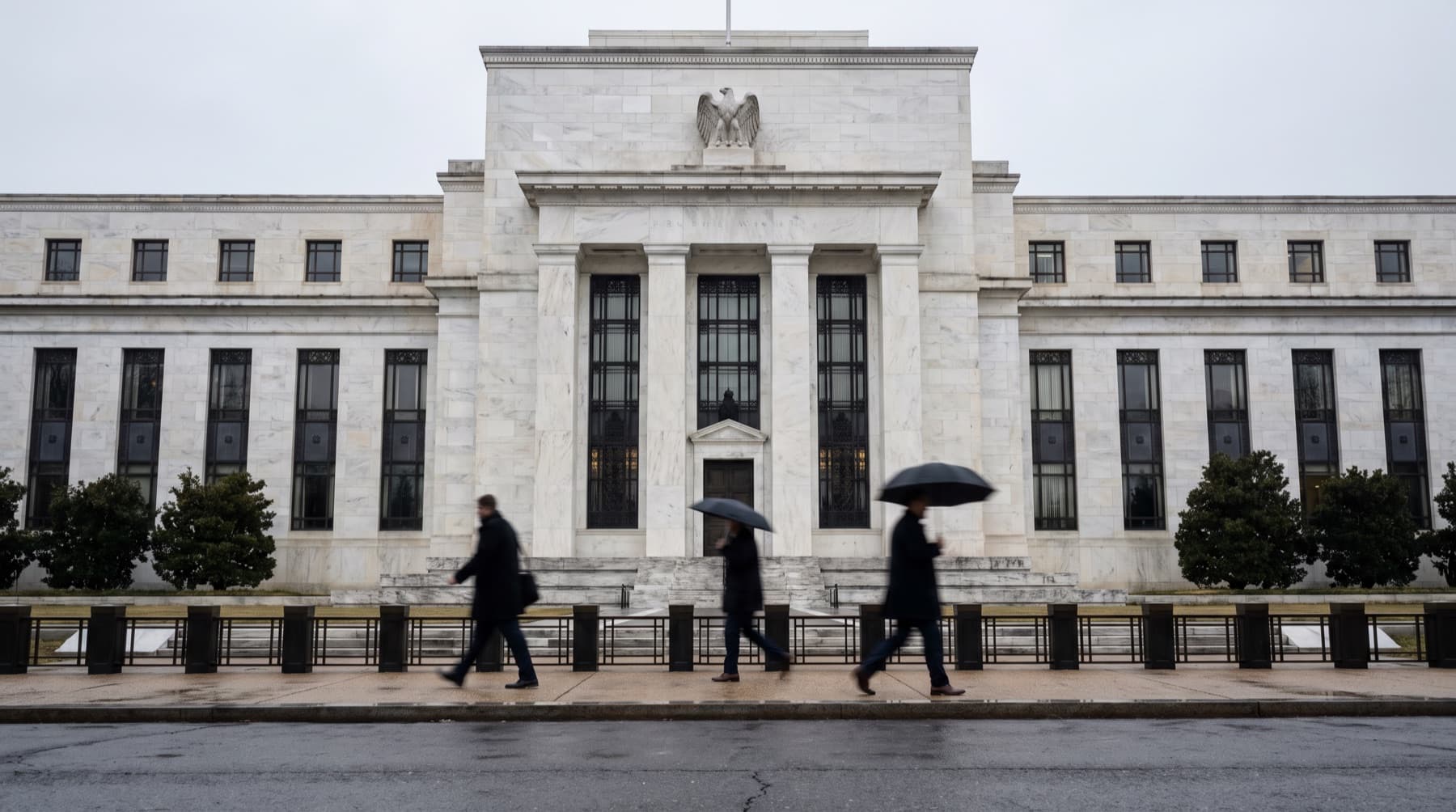
Washington —Monetary policy is what a central bank does to influence the cost and availability of money and credit, mainly by setting a short-term interest rate and managing its balance sheet, so that inflation stays low and employment stays high. In the United States that job belongs to the Federal Reserve, which Congress has told to pursue maximum employment, stable prices and moderate long-term interest rates.
When a central bank raises rates, borrowing gets more expensive, spending and hiring slow, and price pressures usually ease. When it cuts rates, credit gets cheaper and activity tends to pick up. Policy that holds back the economy is called tight, or restrictive. Policy that supports it is called loose, or accommodative.
“The term “monetary policy” refers to the actions undertaken by a central bank, such as the Federal Reserve, to influence the availability and cost of money and credit to help promote national economic goals.”
What is the Federal Reserve?
The Federal Reserve is the central bank of the United States. The Federal Reserve Act of 1913 gave it responsibility for monetary policy. It has three main parts: a seven-member Board of Governors in Washington, 12 regional Federal Reserve Banks, and the Federal Open Market Committee (FOMC), which sets interest rate policy.
The FOMC has 12 voting members: the seven governors, the president of the New York Fed, and four of the other 11 Reserve Bank presidents, who rotate through one-year terms. Presidents who are not voting that year still attend and take part in the discussion. The committee holds eight scheduled meetings a year. Kevin Warsh chairs both the Board and the FOMC in 2026, according to the Fed’s website.
What does the Fed do?
Its best-known job is setting monetary policy. The Fed often calls its goals the “dual mandate”: maximum employment and stable prices. It defines stable prices as inflation of 2 percent over time. The Fed also supervises and regulates many banks, runs parts of the payments system and lends to banks in emergencies. Those roles support financial stability, but the interest rate decision is the one that moves markets.
How does monetary policy work?
The FOMC’s main lever is a target range for the federal funds rate, the rate banks charge one another for overnight loans of reserves held at the Fed. Our earlier explainer on the federal funds rate covers that benchmark in detail. The Fed keeps the market rate inside its target range with a set of administered rates:
- Interest on reserve balances (IORB): the rate the Fed pays banks on money they keep at the central bank. Banks have little reason to lend for much less than this.
- Overnight reverse repurchase agreements: a facility that lets money market funds and other firms park cash with the Fed, putting a floor under short-term rates.
- Standing repurchase agreements: short-term loans to eligible firms against Treasury and other high-quality collateral, which limit spikes in funding rates.
- The discount rate (primary credit rate): the rate on loans to banks through the discount window.
- Open market operations: buying or selling securities to change the size and mix of the Fed’s balance sheet. Large-scale purchases are often called quantitative easing, and shrinking the portfolio is called quantitative tightening.
In the Fed’s own description, changes in the federal funds rate set off a chain of effects that reach other short-term rates, exchange rates, long-term interest rates and the supply of money and credit, and in the end employment, output and prices. The effects take time to arrive. They also depend on expectations: markets often price a move before the Fed makes it, which is why the FOMC’s statements, projections and press conferences matter almost as much as the rate itself.
Long-term rates do not simply follow the policy rate. Yields on 10-year Treasury notes and mortgage rates also respond to expected inflation, government borrowing and the extra return investors demand for lending over long periods. The 30-year mortgage rate in FRED’s weekly series rose from 6.00 percent in early March 2026 to 7.40 percent in October, and the FOMC did not raise its policy rate at its October meeting.
What is fiscal policy, and how is it different?
Fiscal policy is the government’s use of taxes and spending to influence the economy. In the United States, Congress and the President set it through budgets and tax laws, and the Treasury Department collects revenue, pays the bills and borrows to cover the gap. The Treasury defines a budget deficit as spending that exceeds money collected over a period. The government funds deficits by issuing Treasury bills, notes and bonds, which add to the national debt.
- Who decides: monetary policy is set by an independent central bank; fiscal policy is set by elected officials.
- Main tools: monetary policy uses interest rates and the central bank’s balance sheet; fiscal policy uses tax rates, government spending and transfers.
- Speed: the FOMC can change rates at any of its eight scheduled meetings, or between them; fiscal changes usually require legislation.
- Reach: rate changes act broadly through credit markets; fiscal measures can be aimed at particular households, industries or regions.
The two interact. Heavy government borrowing can push up Treasury yields and work against a central bank trying to ease conditions. Stimulus spending during a period of tight policy can keep inflation higher for longer. A central bank cannot control the budget, so it sets rates around whatever fiscal stance the government chooses.
Where does US monetary policy stand now?
The figures in this section are as of November 6, 2026, and will change.
At its October 27-28 meeting, the FOMC kept the target range for the federal funds rate at 3.75 to 4 percent. The vote was 10 to 2. Governor Lisa Cook and Cleveland Fed President Beth Hammack dissented because they wanted a 25-basis-point increase. The statement said that “inflation remains elevated” and that economic activity was “expanding at a strong pace.” The Board kept the rate on reserve balances at 3.90 percent and the primary credit rate at 4.0 percent. The committee also said it would keep reserves in the banking system “ample” and buy Treasury bills when needed to do so. On November 5, Yahoo Finance reported Hammack as saying the FOMC may need to tighten policy gradually to bring inflation down.
Consumer price inflation has risen back above 4%
US consumer price index, % change from a year earlier; Fed goal is 2%. October 2025 not available.
Source: Bureau of Labor Statistics via FRED
Consumer prices rose 4.02 percent in the 12 months to September, up from 2.66 percent in February, according to Labor Department data compiled by FRED. The unemployment rate was 4.2 percent in September. The effective federal funds rate was 3.88 percent as of November 4. The 2-year Treasury yield, which tracks expected Fed policy closely, was 4.58 percent on November 4. The 10-year Treasury yield ended at 4.837 percent on November 5, and the 30-year mortgage rate averaged 7.18 percent that week.
Next on the calendar: minutes of the October meeting on November 18, then the FOMC’s December 8-9 meeting, which will include a press conference and updated economic projections from policymakers.