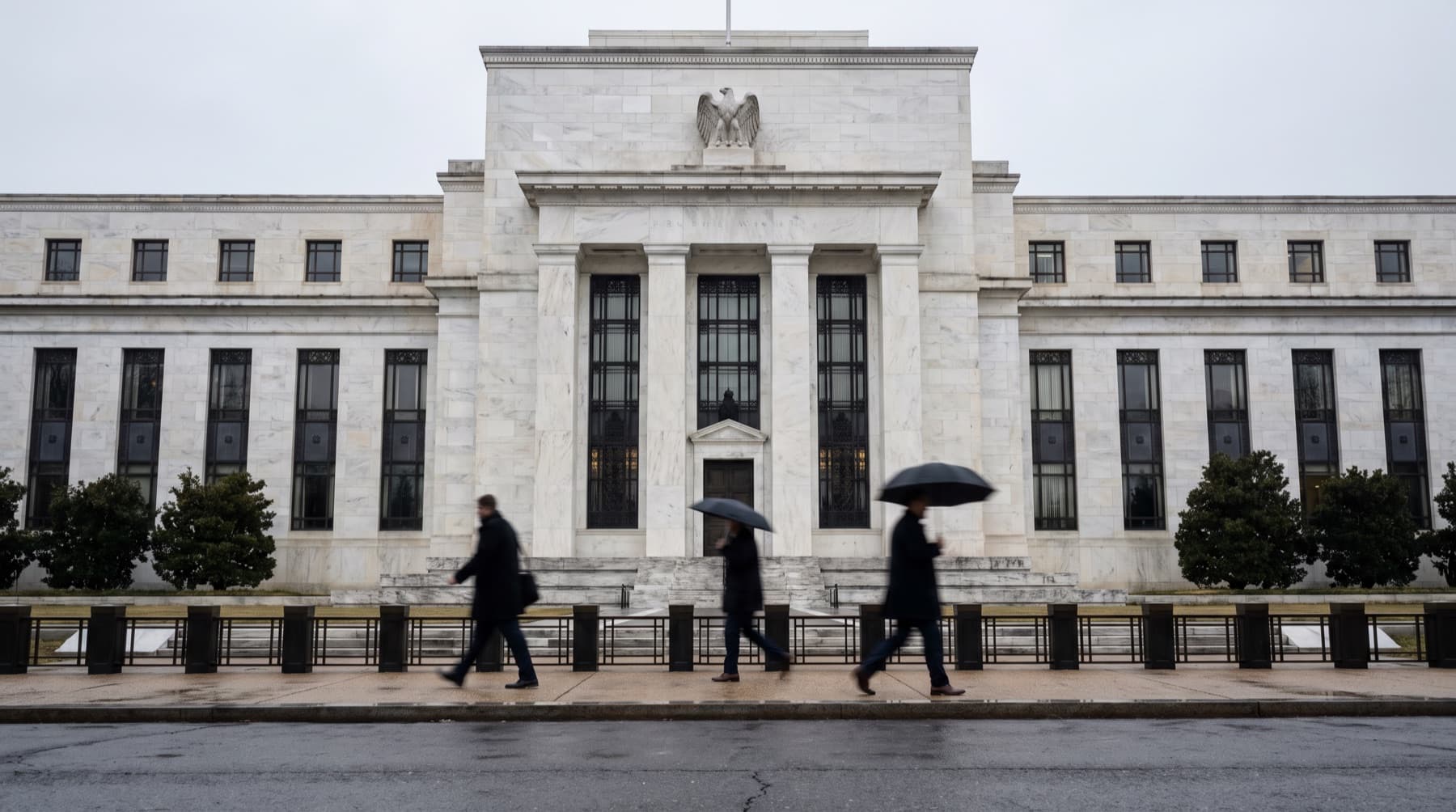
Washington —The Bureau of Labor Statistics publishes the October employment report at 8:30 a.m. Eastern time on Friday, Nov. 6, and economists polled by Dow Jones expect a gain of 59,000 nonfarm payroll jobs with the unemployment rate holding at 4.2 percent, according to CNBC. The report is the main labor-market reading Federal Reserve officials will have in hand as they debate how quickly to resume raising interest rates.
It also arrives at a fragile moment for markets. The S&P 500 fell 4.36 percent on Thursday to close at 7,353.73, and the Nasdaq Composite dropped 5.52 percent to 24,315.00, according to delayed market data. The Cboe Volatility Index jumped to 28.18 from 16.61 the previous session. That combination of a hawkish central bank and nervous equity markets raises the stakes on the payrolls, unemployment and wage figures alike.
Where does the Fed stand going into the report?
The Fed raised its benchmark rate by a quarter percentage point to a range of 3.75 percent to 4 percent on Sept. 16, in a unanimous vote. At its Oct. 28 meeting it held that range, but the decision passed 10 to 2: Governor Lisa D. Cook and Cleveland Fed President Beth M. Hammack dissented in favor of another quarter-point increase. The committee said inflation remains elevated and that job gains have kept pace with the workforce while the unemployment rate has changed little.
“The accumulation of more information will help the Committee determine the policy stance appropriate to ensure a timely return of inflation to the Committee’s 2 percent goal.”
Friday’s report is a large part of that information. Officials who spoke on Thursday framed the question as one of pace rather than direction. In prepared remarks for a conference in Zurich published by the Cleveland Fed, Hammack said headline inflation as measured by the personal consumption expenditures price index was 3.6 percent in September, with the core measure at 3.1 percent. She said she expects policy will need to move to a restrictive stance and that she prefers getting there through more frequent, smaller adjustments when possible.
Richmond Fed President Thomas Barkin told CNBC he expects the Fed will have to raise rates further and that a gradual pace still makes sense to him. Barkin is not a voter on the committee this year but will be in 2027. Futures markets were pricing a better than 80 percent chance of a hike at the Dec. 8–9 meeting, according to CNBC, citing the CME Group’s FedWatch tool. Consumer prices rose about 4.0 percent in the year to September, based on the Labor Department’s consumer price index as compiled by the St. Louis Fed.
What should readers watch in the payrolls number?
The headline payroll figure has been small for more than a year. Employers added 29,000 jobs in September, following an average monthly gain of 45,000 over the prior 12 months, the BLS said. Payroll growth from January 2025 through September 2026 averaged 35,000 a month, according to CNBC’s calculations.
A low number does not by itself signal a weakening labor market. The labor force has been shrinking, so fewer new jobs are needed to keep unemployment steady. The labor force participation rate stood at 61.8 percent in September, and the labor force is down by close to 1 million since September 2025, according to CNBC. The Fed’s own statement describes job gains as keeping pace with the workforce, which is why officials have focused on the unemployment rate rather than the payroll count.
Three details deserve more attention than the headline:
- Revisions. In the September report, July was revised to a loss of 10,000 jobs from a gain of 21,000, and August to 133,000 from 162,000, leaving the two months a combined 60,000 lower than first reported.
- Health care. The sector has carried much of the hiring but added 17,000 jobs in September, below its 12-month average of 33,000.
- Sector divergence. Financial activities employment is down 129,000 since May 2025, while manufacturing is up 72,000 from a low in December 2025, according to the BLS.
Why do unemployment and wages matter as much as the headline?
The unemployment rate was 4.2 percent in September and has stayed in a range of 4.1 percent to 4.3 percent since March, the BLS said. A reading at or below that range would support the view, voiced by Barkin, that the labor market is tight enough for the Fed to concentrate on inflation. A clear move higher would give officials who favor a slower pace more room to wait.
Unemployment rate has stayed between 4.0% and 4.5% since early 2025
US unemployment rate, monthly; no October 2025 reading in the series
Source: Bureau of Labor Statistics via FRED
Beneath the steady rate, joblessness has become more persistent. The number of long-term unemployed, those out of work for 27 weeks or more, was 1.9 million in September, or 27.1 percent of all unemployed people. Layoffs, by contrast, remain low: initial jobless claims fell to 189,000 last week, according to CNBC.
Wages are the third test. Average hourly earnings for private-sector workers rose 0.1 percent in September to $37.81 and were up 3.0 percent from a year earlier, the BLS said. That is slower than the roughly 4.0 percent rise in consumer prices over the same period, which suggests pay is not the main source of current inflation. Hammack described price pressures as relatively broad based, reflecting both supply and demand. A sharp pickup in wage growth would add a labor-cost element to that picture and strengthen the case for the hikes she and others favor; continued modest gains would leave the debate centered on prices themselves.
How could Treasury yields and stocks respond?
Bond markets have already shifted. The 10-year Treasury yield fell to 4.837 percent on Thursday from 4.894 percent, and the 5-year yield to 4.608 percent from 4.689 percent, as investors sought safety during the stock sell-off. The 2-year yield, which is more sensitive to Fed expectations, was 4.58 percent on Nov. 4, down from 4.92 percent in late September, according to FRED data.
For equities, the report could cut either way. A strong report would ease concerns about growth but reinforce expectations for a December hike, which would weigh on rate-sensitive shares. A weak one would ease rate pressure only if it came with softer wages and a higher jobless rate, and might add to worries about the economy at a time when the S&P 500 is already about 6 percent below where it stood on Oct. 6.
After Friday, the focus moves to the next inflation data and the Dec. 8–9 meeting, where officials will also publish updated economic projections. With two policymakers already voting for a hike in October and others signaling gradual increases, the jobs report is more likely to shape the timing of the next move than whether one comes at all.